Why Authentic Travel Writing Matters More Than Ever

I grew up reading travel blogs at their peak, in the 2010s. Since then, a lot has changed. Authentic travel writing, purely out of passion, has been largely replaced by websites optimized for affiliate revenue, guides written by people who have never set foot in the places they write about, and, worst of all, AI-generated content.

As I’ll describe in my next story, I’ve always wanted to be a traveller, a nomad, but never a travel writer. Now, I feel that I must, because the Internet needs honest travel writing more than ever.

The Shift From Storytelling to Selling

I’m not against affiliate marketing or sponsored collaborations in any way. Creators put a lot of effort (and often money) into their content and deserve to be compensated for that. If I love someone’s content, I want them to keep creating, and everyone needs to make a living. Plain and simple.

The problem arises when making money takes precedent over providing the reader (or watcher) with value.

Take this example: Last year, when I was planning my trip to Ushuaia in Argentina, I typed on Google “best things to do in Ushuaia,” and opened four of the top results.

All of them were personal blogs; at least, they seemed like it. Many websites have been bought by media companies that push the same products and experiences across the whole lot (yes, that’s a thing).

One stood out. Its top recommendation was to take a helicopter ride over Ushuaia, a recommendation that got repeated at every chance throughout the page.

“Especially if you only have a couple of days in Ushuaia, you simply must take a helicopter ride to see it all.”

“If you’re spending more than a week in Ushuaia, you should definitely take a helicopter ride — you have ample time after all!”

Call me cynical, but I can’t see this as anything other than a blatant push to sell the highest ticket affiliate product. Sure, riding a helicopter is cool. But am I supposed to believe that it’s better than:

  • Exploring some of the most iconic and pristine national parks in the world?
  • Sailing the Beagle Channel and seeing sea lions in their natural habitat?
  • Visiting a penguin colony?
  • Trying Patagonian lamb and other local dishes?

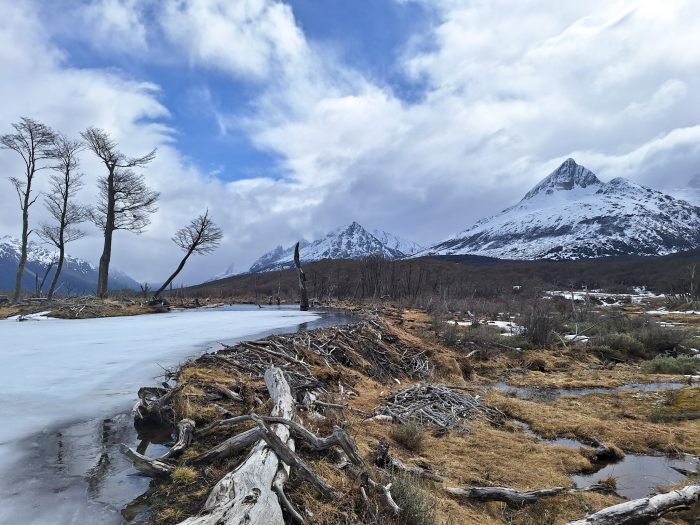
hike to esmeralda lake ushuaia argentina
The hike to Laguna Esmeralda, an emerald-green glacial lake near Ushuaia in Tierra del Fuego, Argentina.

Pushing expensive experiences instead of providing honest recommendations can quickly burn the trust bridge that gets an audience to buy from a creator. But a high-authority website that consistently ranks on Google will continually get new visitors, and a lot of them will take the bait. Slowly, this erodes people’s trust in travel content online.

And, as trivial as it may seem, the idea of someone taking their once-in-a-lifetime dream trip to the “end of the world” and not making the most of it due to dubious online recommendations saddens me. It also disappoints me to see that something that used to be so beautiful and personal — travel blogging — has been poisoned by commercial interests.

Armchair Travel Experts and AI Writing

Thanks to media companies launching or acquiring websites, many travel guides today are created by people who have never set foot in the destinations they write about. The issue is that no matter how much they research, nothing can substitute for firsthand experience.
Once again, let me illustrate with an example. After visiting Ushuaia, I made my way up the continent, ending the trip in Cartagena, Colombia.

This time, I didn’t specifically search for travel tips; a week before arrival, I received a newsletter email from one of the biggest travel media companies in the world that included a guide to Cartagena. “Perfect timing!”, I thought. One of the “must-visit” places they listed was the Bazurto market.

Now, I need you to know that I’m not easily fazed. I’ve visited countless markets around the world, from remote villages in Morocco to chaotic Southeast Asian markets featuring crocodile heads and gutted toads. I’ve eaten frogs, jellyfish, and chicken feet in Vietnam. And (although accidentally) I’ve walked through the garbage town of Máncora, Peru, “the hole,” where locals don’t dare to enter.

I also need you to know that Colombian people are some of the kindest and most welcoming in the world; the people at Bazurto market were no exception. The problem was that it is a dark, grimey, dizzying maze of tight walkways between vendors selling everything from fish to electronics.

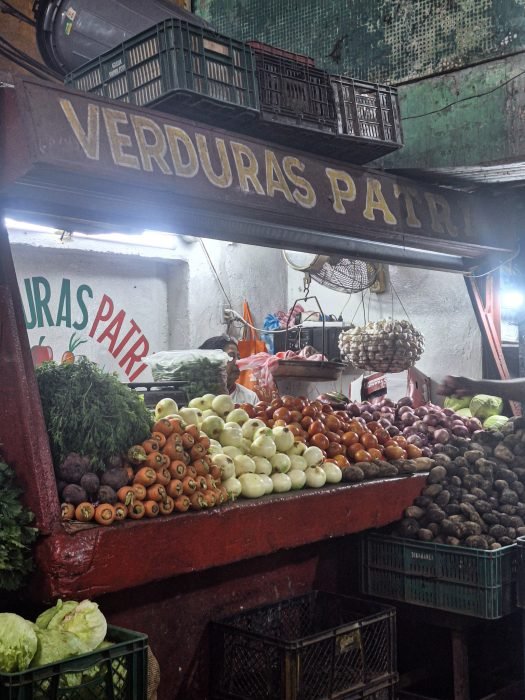
vegetable stand at bazurto market in cartagena colombia
Vegetable stand at Bazurto market in Cartagena, Colombia.

In addition to being near-impossible to navigate and find what you’re looking for, the smell in and around the butchers’ area is unbearable. After almost throwing up about six times, I simply ran outside and muttered, “I’ve had enough. Time to go.”

I’m not saying it’s impossible for someone to enjoy the market and recommend it honestly (if they remain far from the butchers’ section). But a description so detached from reality could have only been written by someone who has never been there.

“Boo hoo, you were misled into a smelly market. What’s the big deal?”

For a start, travelling isn’t cheap, and most people won’t return to the same destination. So, it’s important not to mislead or waste their time. Of course, sometimes you go to a place and realize that it wasn’t worth it or what you imagined. It happens. But it’s significantly worse when it happens because someone lied to you on the Internet.

While I consider secondhand guides by armchair travellers an issue, the prevalence of AI nowadays is an even greater problem.

According to a study by Graphite, by late 2024, more than half (52%) of new articles published each month online were written by AI, with that percentage growing in 2025. In fact, Ahrefs’ analysis of nearly 1M pages posted in April 2025 showed that at least 74.2% contained AI content. And experts predict that this number will only grow.

AI draws from online content; if the source material can’t be trusted to begin with (because it was written just to sell or by someone who doesn’t know what they’re talking about), AI will simply rehash inaccurate content into even more flawed pieces — at a speed and scale much greater than humans could ever achieve.

Months later, the Internet is populated by even more unreliable AI content. AI will then use that content as its source material and continue descending into poorer quality. Years later…

Final Thoughts

Imagine an online landscape where a big portion of travel content is written only with commercial intent in mind and no authenticity. Then, armchair travellers use this flawed information as source material to write their guides. And AI makes it worse by combing through all this dubious information, repackaging it, and serving it to millions.

Real, authentic, human views on travelling are needed more than ever. And that’s why I decided to start sharing my first-hand experiences.

Related Posts

Don’t Miss the Next Story

Get behind-the-scenes stories delivered straight to your inbox.

Scroll to Top